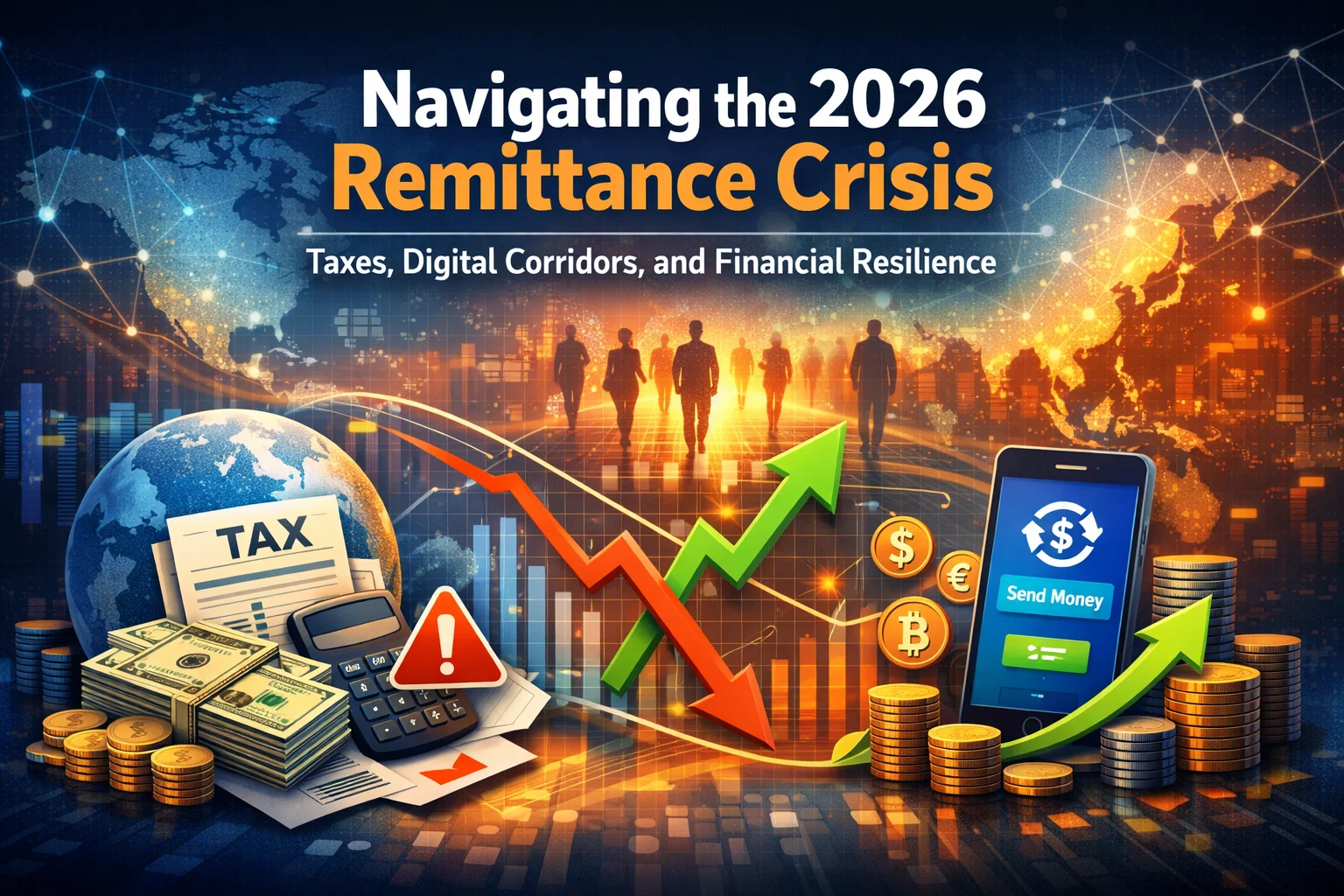
On January 1, 2026, the global remittance landscape faced a seismic shock: the implementation of a 1% federal tax by the United States on all outward money transfers. While the tax aims to generate revenue, its impact is projected to reduce formal remittance flows from the U.S. by approximately 1.6%. For migrants who consider remittances their primary monthly expenditure—up to 72% in some cohorts—this tax adds a significant burden to an already high-cost necessity.
The Rise of Digital Corridors
To combat the rising costs of the “remittance tax,” there is a massive migration toward digital corridors. Traditional money transfer operators, often characterized by high fees and physical branch requirements, are being bypassed by agile neobanks and borderless payment platforms.
- Zolve: This neobank allows immigrants moving to the U.S. to open bank accounts and access credit cards before they arrive, leveraging their home-country financial history. In 2026, Zolve’s “financial freedom” model has expanded to Australia, Canada, and the UK.
- Belo: A digital wallet for freelancers and remote workers that enables users to receive ACH transfers (electronic money transfers between U.S. bank accounts) directly into their wallets, bypassing international wire fees.
- Planet9: A specialized neobank offering “send-now-pay-later” and “receive-now-pay-later” services, providing liquidity to migrants during periods of exchange rate volatility.
Financial Resilience through Data Portability
The key to migrant financial resilience in 2026 is data portability—the ability to carry one’s financial identity across borders.
The Credit Passport® and Cash Atlas™
Nova Credit has revolutionized this space with its Credit Passport®, which translates international credit reports from over 20 countries into a local-equivalent score that domestic lenders like American Express and HSBC can ingest. In 2026, the focus has shifted to Cash Flow Underwriting via Nova’s Cash Atlas™. By analyzing consumer-permissioned bank transaction data—tracking income, assets, and spending patterns—Cash Atlas provides a “NovaScore Cash Flow”. This allows lenders to underwrite applicants based on their real-time ability to pay, rather than a 2-3 month old credit bureau report.
Case Study: Nova Credit’s “Eligibility Compass”
In late 2025, Nova Credit launched Eligibility Compass, a product specifically designed for the affordable housing sector. This tool automates income and asset verification for public housing providers, reducing the time to confirm eligibility from weeks to minutes. By cross-referencing multiple data sources, it ensures that migrants seeking housing are not “left behind” due to undocumented or unconventional income streams.
A Financial Resilience Checklist for 2026
To navigate this new environment, migrants should:
- Adopt Neobanking: Use app-based platforms with zero-balance requirements and transparent fee structures.
- Leverage Alternative Data: Ensure your utility and mobile payments are tracked to build a “digital footprint” for future credit needs.
- Monitor Exchange Corridors: Use fintech tools that offer near real-time FX rates to minimize currency exposure during transfers.
- Prioritize Data Portability: Use services that allow you to “port” your home country credit history to your new host nation.